AI Plan Ingestion | The utecture Difference
Everyone’s racing to make AI take-offs faster, but that’s not the hard part anymore.
If you’ve looked at construction tech lately, you’ll have noticed a pattern: a new tool launches, you upload a set of drawings, and a few minutes later you get a list of quantities back. Every few weeks, another one shows up promising to do it just a little faster than the last.
That’s a genuinely useful thing to automate. Taking off materials by hand is slow, and any tool that speeds that up, saves estimators time. But there is a problem… once every tool on the market can pull quantities out of a drawing in roughly the same amount of time, speed stops being the thing that sets anyone apart. It just becomes what everyone expects as standard. And when that happens, a different question starts to matter a lot more than “how fast”.
How do you actually know those quantities are right?
That’s the question we think the whole category is going to have to answer sooner or later, and it’s the one we’ve built utecture around from the start.
Reading a drawing isn’t the same as understanding a building
Most AI take-off tools work by scanning a drawing, recognising shapes and labels, and counting or measuring what they find. It’s a bit like a very fast, very patient person going through a plan with a highlighter. That’s useful, but it has a limit: the tool doesn’t actually know why a wall is a certain length, or what it’s made of, or whether it matches what was actually specified. It’s just reading marks on a page and trusting that the page is right.
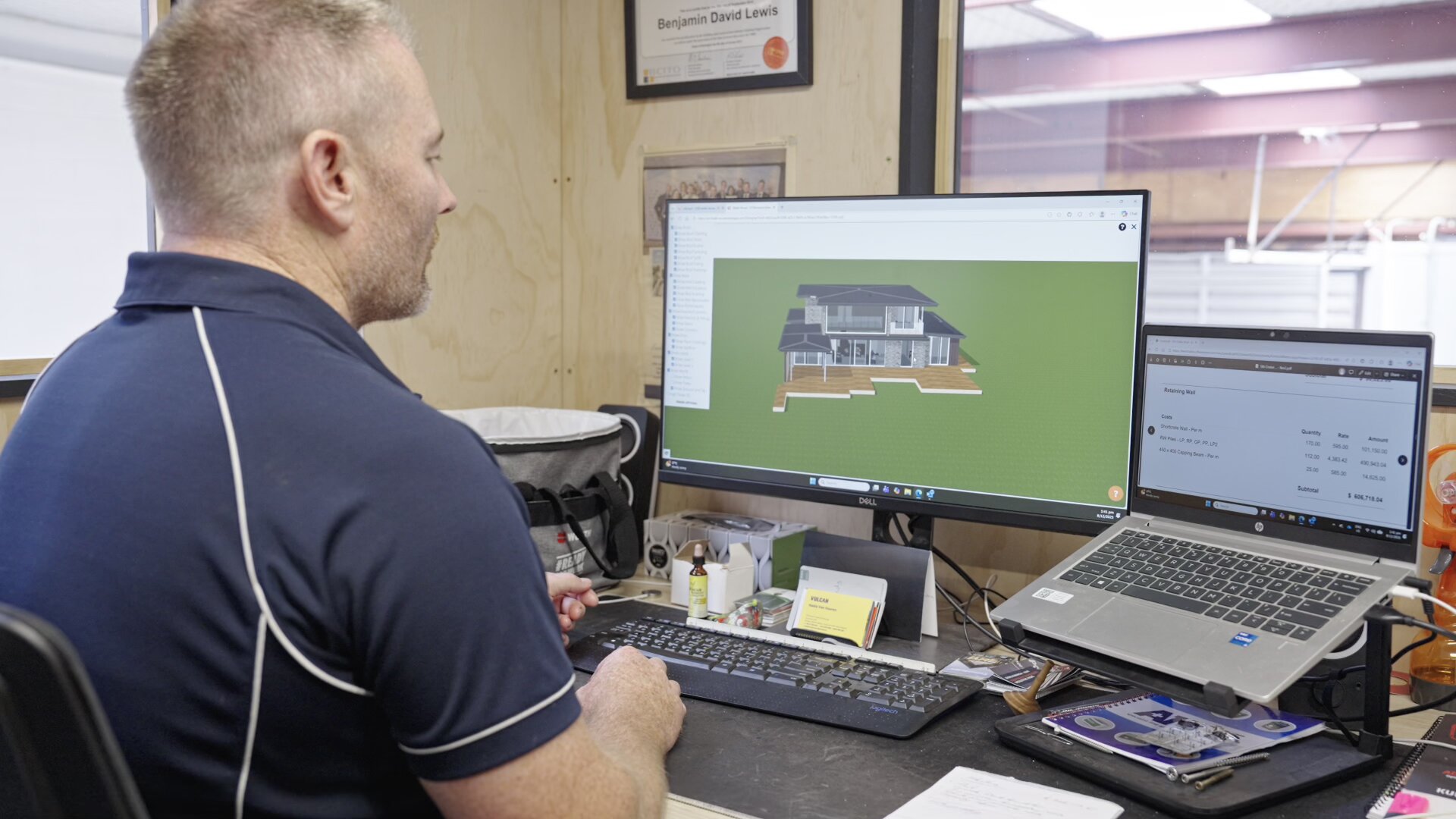
utecture works differently. Instead of reading a flat drawing and guessing at what it means, we build a live digital model of the project, where the design, the specifications, and the actual products are all connected to each other. A quantity in utecture isn’t just a number that got measured off a plan, it exists because a particular wall is built a particular way, using a particular product, and that’s recorded in the model itself. That connection is what we mean by a “validation layer.” It’s not a checking step we bolt on at the end, the validation is built into how the number was generated in the first place. So, when a design changes, the model updates, and every quantity affected updates with it, and it’s still linked back to the same spec and product it always was.
Why this matters once someone actually has to act on the number
In every build there is a point where a number stops being information and starts being a decision. A wrong quantity on a take-off report is annoying. A wrong quantity that turns into a purchase order, a delivery, and a price you’ve committed to is expensive, both in wasted materials and in a second trip to site – as well as a builder who starts double-checking everything.
If you’re a merchant supplier, “the AI found these numbers” isn’t really an answer to the question your team is actually asking, which is: can we commit to this order? That takes more than a fast extraction. It takes a model that can show where a number came from – which spec it’s tied to, which design decision produced it, so a builder can actually trust it without re-checking everything by hand.
Speed is easy to show off. Confidence is what actually gets used.
Right now, most of the market is competing on speed, because speed is easy to demonstrate and you can show it in a two-minute demo. Confidence is harder to prove in a demo, but it’s the thing that actually decides whether someone will use a number without double-checking it first. We think that’s where this is all heading. The question is moving on from “what quantities can AI find?” to “how do we know those quantities are correct?” – and we are building the answer to that now, instead of trying to add it on later.
Want to learn how it works? Chat to our sales team today.